Mary Agnes Ratelle
Historian of fashion and American illustration and culture, Mary Agnes Ratelle offers history lectures to local museums, community organizations, conferences, and more.

History Lectures
More Than a Housewife: Women in Postwar Magazine Illustration
The 1950s housewife has been a mainstay of American visual culture, used to embody both the hopes of postwar economic opulence and the limitations of the domestic sphere that second wave feminism pushed against. In this talk historian, Mary Agnes Ratelle, explores the visual representation of the 1950s housewife, analyzing her representation in magazine illustration and placing these images into the context of postwar marketing practices and psychological theory.
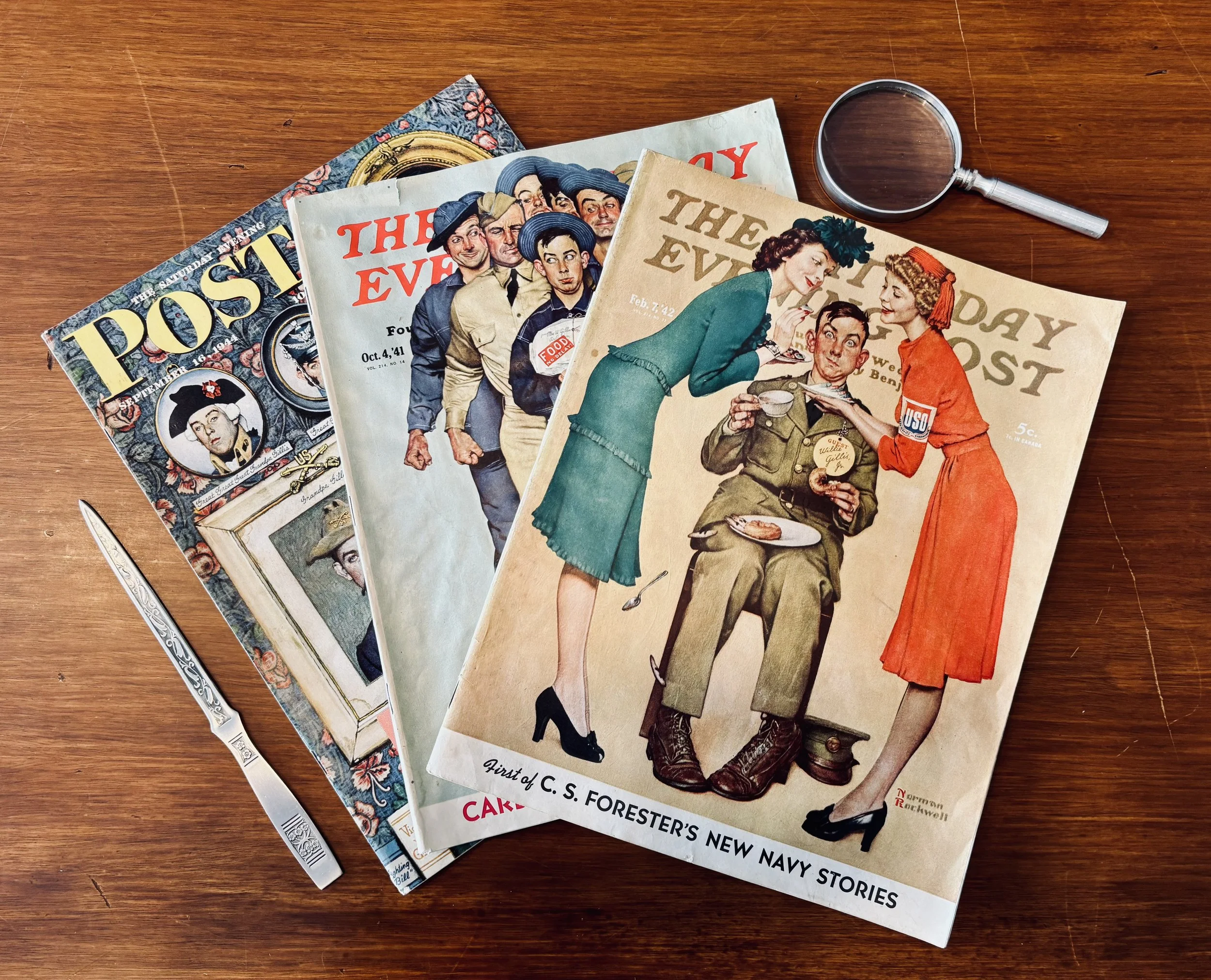
The Nation Makes the Man: Norman Rockwell, Willie Gillis, and World War II Masculinity
The Neoclassical period of late 18th and early 19th century Europe was a period transfixed on emulating the aesthetics of ancient Greece and Rome. Even women’s fashion followed this trend, developing á la grecque styles, characterized by light colors and a natural silhouette. These Grecian styles brought an element of mobility and intellectualism to fashion, making fashionable women active participants in the artistic world. In other words, by making fashion classical, fashion aligned itself with the world of art, therefore making fashion itself art and the women who wore them artists.
To Be Art and Artist: Neoclassical Fashion and the Artistic Woman
Throughout the late 19th and early 20th centuries, the United States' leadership was deeply invested in the state of American Masculinity. As the U.S. entered World War II, a new era of American masculinity emerged, highlighting the aggressive and patriotic military man. Norman Rockwell, in his Saturday Evening Post illustrations of Willie Gillis, diverged from this trend, portraying the "American everyman". In this talk, historian Mary Agnes Ratelle, discusses the visual portrayal of American masculinity and its roots in Roosevelian ideals, as well as the work of Norman Rockwell and its impact on American culture.